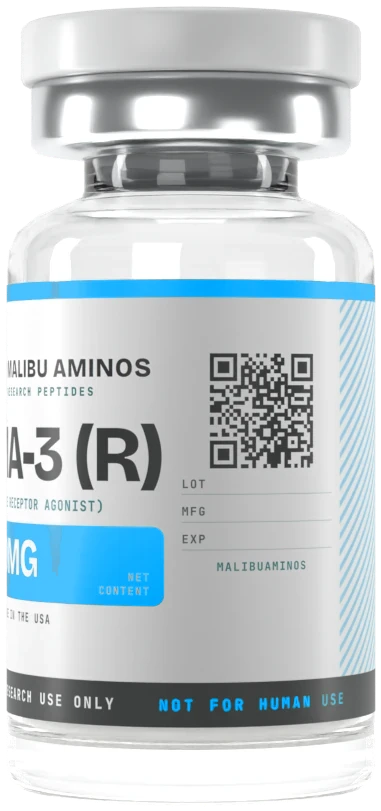
KPV: the α-MSH tripeptide explained
KPV is one of the smallest peptides in research use: three amino acids, Lys-Pro-Val. It is the C-terminal end of alpha-melanocyte-stimulating hormone (α-MSH), and it has been studied mostly in intestinal and skin-cell inflammation models.
Chemistry
- Sequence: Lys-Pro-Val (KPV)
- Molecular formula: C16H30N4O4 (free acid)
- Molecular weight: about 342.4 g/mol
- CAS: 67727-97-3
KPV vs Ac-KPV-NH2
In α-MSH the C-terminus is amidated, so some studies use Ac-KPV-NH2: an acetyl group on the N-terminus and an amide on the C-terminus. That form is about 41 units heavier than free KPV. When comparing papers, check which form was used, and check the mass on your lot’s certificate of analysis.
Main themes in the literature
- Intestinal uptake. KPV enters intestinal epithelial cells through the PepT1 transporter; studied in cells and mouse colitis models (Dalmasso et al., Gastroenterology, 2008).
- Colitis models. Mouse DSS and T-cell-transfer colitis, including MC1R-deficient mice (Kannengiesser et al., Inflamm Bowel Dis, 2008).
- α-MSH family. Reviewed by Brzoska et al., Endocr Rev, 2008.
- Skin cells. Keratinocytes exposed to fine dust in vitro (Sung et al., Tissue Cell, 2025).
Verifying a lot
A three-residue peptide gives a simple mass spectrum. See how mass spectrometry confirms identity.
More guides
- GHK-Cu: structure, history and published research
- AHK-Cu vs GHK-Cu: comparing two copper tripeptides
- SNAP-8 vs Argireline: two SNAP-25 mimic peptides compared
- Selank: the tuftsin-derived heptapeptide explained
- Adamax and Semax: what is known about this analog
- BPC-157 vs TB-500: two research peptides compared
- MOTS-c: the mitochondrial-derived peptide explained
- Epitalon (AEDG): what the research covers
- Thymosin alpha-1: structure, history and research
- Why a peptide's molecular weight can differ: salts, caps and oxidation
- HPLC purity: what the percentage on a COA means
- Mass spectrometry: how a peptide's identity is confirmed
- How to verify a lot with the QR code on the vial
- Lyophilized peptides: what they are and how labs store them
- How to choose a research compound supplier: 7 points
- How to read a certificate of analysis (COA)
All Malibu Aminos products are sold for laboratory research only. Not for human or veterinary use.
View KPV and its per-lot certificate of analysis
For laboratory research use only. Not for human or veterinary use. This guide summarizes published scientific literature for context. It is not medical advice and does not describe any product as suitable for human use.