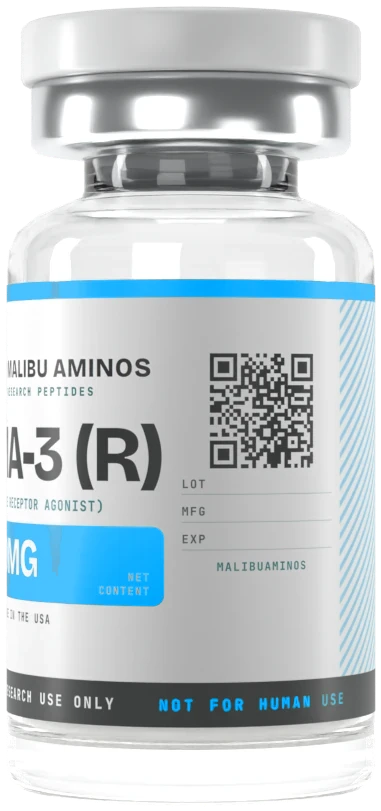
Made in the U.S.A.
Not imported.
Every product Malibu Aminos sells is manufactured right here in the United States. No imported finished product, no relabeling, no ocean crossing between the lab that makes it and the lab that uses it.
Built here.
Tested here.
Shipped from here.
Much of the research peptide market runs on finished product made overseas, imported and relabeled. That adds weeks in transit, customs holds and a supply chain that is hard to trace.
We took the other route. Every compound in our catalog, from single peptides to blends, sprays, capsules and topicals, is manufactured domestically. That keeps production closer to oversight, keeps every batch traceable, and gets vials to your lab without an ocean crossing.
When you buy from Malibu Aminos, you're supporting American manufacturing and American jobs.
Domestic production
All 76 products are manufactured in the United States.
Documented lots
Batch COAs from independent third-party labs that you can match to the vial in hand.
Shorter supply chain
No customs holds and no overseas transit between our facility and your bench.
Shop American-made research compounds.
Quality you can trace, from a supply chain that starts and ends in the U.S.A.
See our productsGHK-Cu: structure, history and published research · AHK-Cu vs GHK-Cu: comparing two copper tripeptides · SNAP-8 vs Argireline: two SNAP-25 mimic peptides compared · Selank: the tuftsin-derived heptapeptide explained · Adamax and Semax: what is known about this analog · BPC-157 vs TB-500: two research peptides compared · MOTS-c: the mitochondrial-derived peptide explained · KPV: the α-MSH tripeptide explained · Epitalon (AEDG): what the research covers · Thymosin alpha-1: structure, history and research · Why a peptide's molecular weight can differ: salts, caps and oxidation · HPLC purity: what the percentage on a COA means · Mass spectrometry: how a peptide's identity is confirmed · How to verify a lot with the QR code on the vial · Lyophilized peptides: what they are and how labs store them · How to choose a research compound supplier: 7 points